
Yards Treated Where Mosquitoes Actually Harbor
Mosquito Control in Greensboro for properties with wooded lots, water features, or soil that holds moisture through fall
Some types of soil can hold standing water longer than sandy or loamy soil, and Piedmont humidity extends mosquito pressure into October across Guilford County. Sentinel Pest Solutions provides mosquito control that targets harborage vegetation and standing water sources rather than fogging open yard space where mosquitoes don't rest during daylight hours. Properties near Lake Jeanette and in wooded areas around Summerfield face higher mosquito populations due to tree canopy that retains moisture and organic debris that collects water after rain. Treatment focuses on the dense ground cover, shrub understory, and shaded areas where adult mosquitoes harbor between feeding cycles.
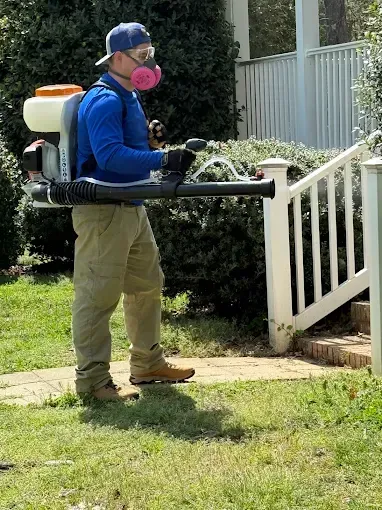
The service begins with property assessment to identify standing water sources—clogged gutters, low spots that don't drain, decorative ponds, and items like tarps or yard equipment that collect rainwater. Treatment applies to vegetation zones where mosquitoes rest during the day, particularly dense shrubs along fence lines, ivy ground cover, and the underside of deck surfaces. This creates a barrier in the areas mosquitoes use as shelter rather than spraying open lawn where they spend minimal time.
Request a property assessment to identify the specific harborage zones and standing water sources contributing to mosquito pressure on your lot.
Mosquitoes spend most of the day resting in shaded, humid vegetation before becoming active at dawn and dusk. Instead of fogging open air, treatment targets the areas where mosquitoes harbor, providing longer-lasting residual control.
Treatment targets:
- Dense shrubs and ornamental landscaping.
- Ground cover and shaded vegetation.
- Other humid resting areas around the property.
Because the treatment remains on treated surfaces for weeks, mosquitoes are affected when they land on vegetation rather than only while flying during application.
After treatment, you can expect:
- Fewer mosquitoes during evening outdoor activities.
- Reduced biting around patios, decks, and yard spaces.
- More comfortable outdoor play for children.
- The greatest improvement during peak mosquito activity at dawn and dusk.
Treatment duration depends on:
- Rainfall and weather conditions.
- Temperature.
- Vegetation density.
- Nearby wooded areas or standing water that can introduce new mosquitoes.
Most treatments remain effective for three to four weeks, with reapplications scheduled based on returning mosquito activity and property conditions rather than a fixed calendar schedule.
Common Questions About This Service
Homeowners in wooded areas and near water features typically ask about treatment methods, protection duration, and whether the service addresses larvae or only adult mosquitoes.
What areas of the property get treated during mosquito control?
Treatment focuses on dense vegetation where mosquitoes harbor—shrub understory, ground cover like ivy or pachysandra, the underside of deck surfaces, and shaded areas along fence lines. Open lawn areas receive minimal treatment because mosquitoes don't rest there during daylight hours when application happens.
How long does each treatment provide protection in Greensboro?
Most treatments remain effective for three to four weeks before mosquito activity returns to noticeable levels. Heavy rainfall can shorten the protection window by washing residual treatment off vegetation, while dry conditions may extend effectiveness slightly beyond four weeks.
Does the service treat standing water where mosquitoes breed?
The initial assessment identifies standing water sources and recommends drainage improvements or removal of water-collecting items. Some services include larvicide treatment for decorative ponds or unavoidable standing water, but eliminating breeding sites provides better long-term control than repeatedly treating larvae.
When should mosquito treatments start and stop in Guilford County?
Mosquito pressure typically builds in late April and extends through October due to warm fall temperatures and persistent humidity. Starting treatment in May before populations peak provides better control than waiting until mosquitoes become a noticeable problem in June or July.
Are mosquito treatments safe for pets and children using the yard?
Products used in residential mosquito treatment are labeled for outdoor residential use and present low risk to people and pets once dried, typically within two to three hours depending on temperature and humidity. Treatment happens in vegetation zones rather than open play areas, which further reduces exposure.
Sentinel Pest Solutions provides mosquito control throughout Greensboro and surrounding Triad communities with full licensing and insurance, applying treatment methods that target actual mosquito behavior rather than generic fogging approaches. Schedule a yard evaluation to review harborage zones and standing water sources affecting your outdoor spaces.